
The economics of centralized cloud computing are starting to work against the companies that built their businesses on it.
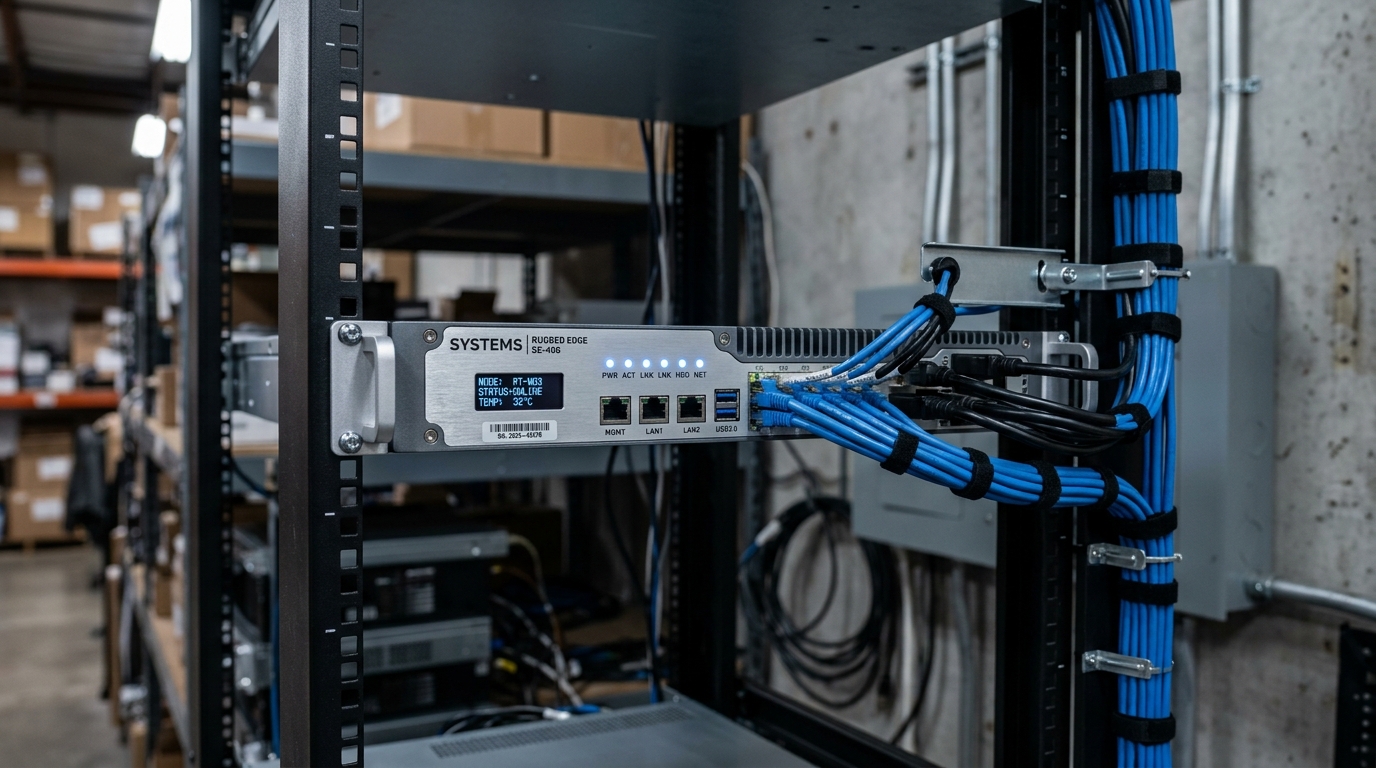
As enterprise software developers watch cloud infrastructure costs climb, a growing number are accelerating their migration toward localized edge processing, running lightweight large language models directly on hardware close to where data is generated rather than routing every query back to distant, centralized server farms. The appeal is straightforward: by keeping inference on local nodes, companies can meaningfully cut the latency involved in bouncing requests across networks, while simultaneously reducing the volume of sensitive data that has to travel over the open internet and sit in third-party cloud environments.
The shift reflects a broader maturation in how organizations think about deploying AI. In the earlier phase of the current AI boom, most enterprise applications defaulted to calling large, centrally hosted models through cloud APIs, accepting the latency and cost tradeoffs in exchange for access to the most capable systems available. As smaller, more efficient models have improved and as the volume of AI-driven workloads inside organizations has scaled up, the calculus has shifted. Running a lightweight model locally on a retail point-of-sale system, a factory floor sensor network, or a regional branch office server can now handle a meaningful share of routine inference tasks without ever touching a centralized cloud, freeing up the more expensive, more capable centralized models for the harder problems that actually need them.
Data breach exposure is the other half of the argument. Every query that travels to a centralized server represents a potential point of failure, whether through interception, misconfiguration, or a breach at the cloud provider itself. Processing sensitive data locally, on hardware that never sends the raw information off-site, narrows that attack surface considerably, an argument that carries particular weight for industries handling healthcare records, financial data, or other regulated information.
The tradeoffs are real, even if they are increasingly seen as manageable. Edge deployments generally can't match the raw capability of the largest cloud-hosted models, and maintaining a distributed fleet of local hardware nodes introduces its own operational overhead, from software updates to physical maintenance across potentially hundreds or thousands of locations. For many enterprises, the emerging pattern is not a wholesale abandonment of the cloud but a more deliberate division of labor: routine, latency-sensitive, or privacy-sensitive tasks handled at the edge, with the heaviest reasoning and most complex queries still routed to centralized infrastructure. As that architecture becomes more common, the pressure on cloud providers to justify their pricing, and the incentive for enterprises to build out their own local compute capacity, both look set to keep growing.



Comments (0)
Please log in to post a comment.
No comments yet. Be the first!