
Belfast has a long memory. It knows what it is like when streets turn into battlegrounds, when communities that live alongside each other suddenly turn against each other. The Troubles left scars that never fully healed, even after the Good Friday Agreement brought a kind of peace.
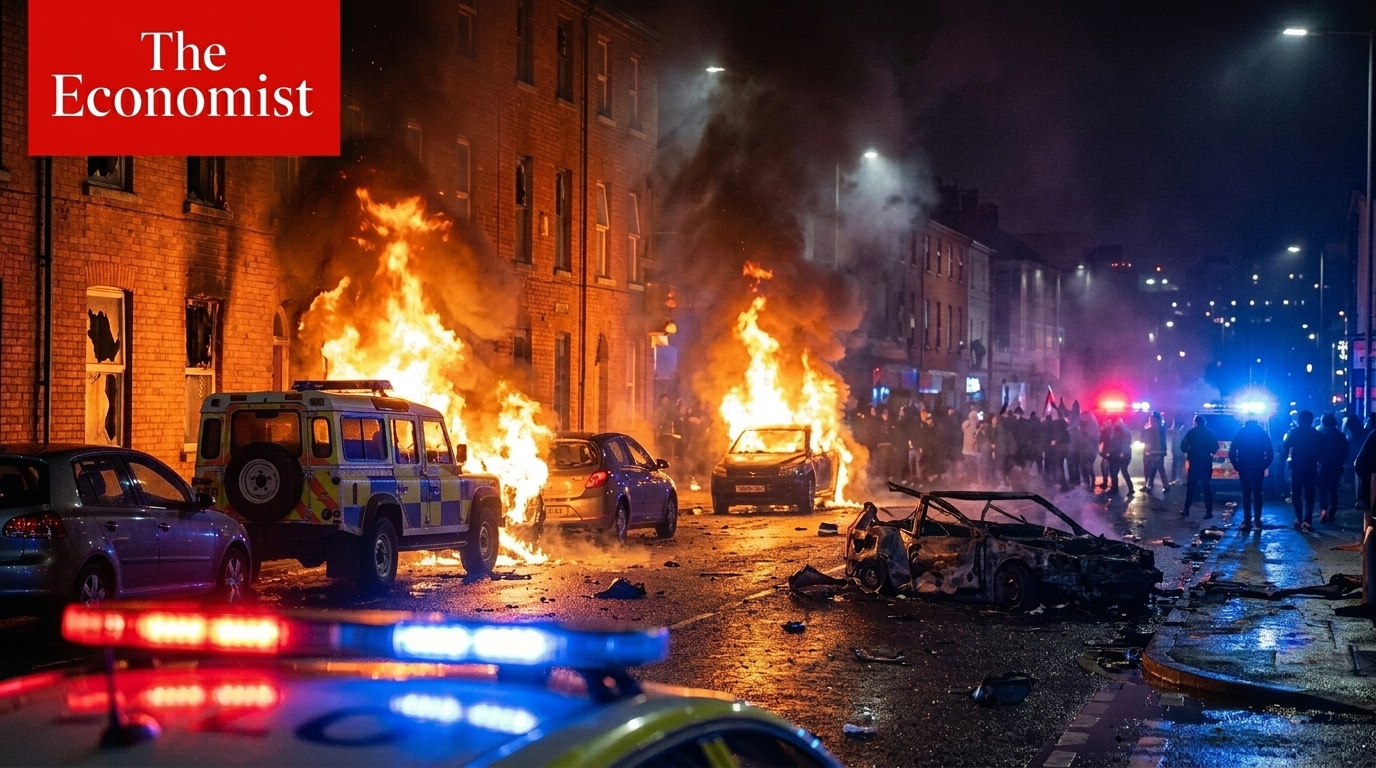
On June 9, 2026, some of those streets were on fire again — not for reasons connected to the old sectarian conflict, but fueled by something else: the arrest of a Sudanese man accused of carrying out a vicious stabbing attack in the city.
The attack itself — described by police as an attempt to kill a man in a particularly violent assault — had occurred just before the protests broke out. The arrest of a suspect identified as a Sudanese asylum seeker was, for some residents, the trigger point for anger that had been building for months over immigration issues.
Crowds gathered. Cars were set alight. Businesses were damaged. Police in riot gear deployed across affected neighborhoods. The scenes, broadcast in real time on social media and picked up by television networks, were shocking — a reminder that even societies with long histories of working through difference remain capable of this kind of eruption.
The UK government reacted swiftly and with unusual unanimity across party lines. Leaders of all major parties called for calm, condemned the violence, and emphasized that the alleged actions of a single individual — however terrible — could not justify attacks on innocent people who happened to share a nationality or ethnic background with the suspect.
Britain has been wrestling with immigration as a political issue for years. The numbers of people arriving by small boat across the Channel, the conditions in asylum accommodation centers, the processing backlogs, and the public perception that the system has lost control — all of this has created a political environment in which anti-immigration sentiment has found growing expression, including occasionally in violence.
The Belfast riots were not a politically organized affair — they appeared to be spontaneous, fueled by social media sharing of footage from the stabbing and by local anger. But they did not happen in a vacuum. They happened in a country where political parties have for years competed to appear toughest on immigration, where the language around asylum seekers has sometimes dehumanized the people it describes, and where the connection between that rhetoric and its real-world effects had been repeatedly warned about.
Within 48 hours, the immediate violence had largely subsided. But the underlying questions — about immigration, about integration, about community relations in a changing Britain — did not go away with the flames.

Comments (0)
Please log in to post a comment.
No comments yet. Be the first!