
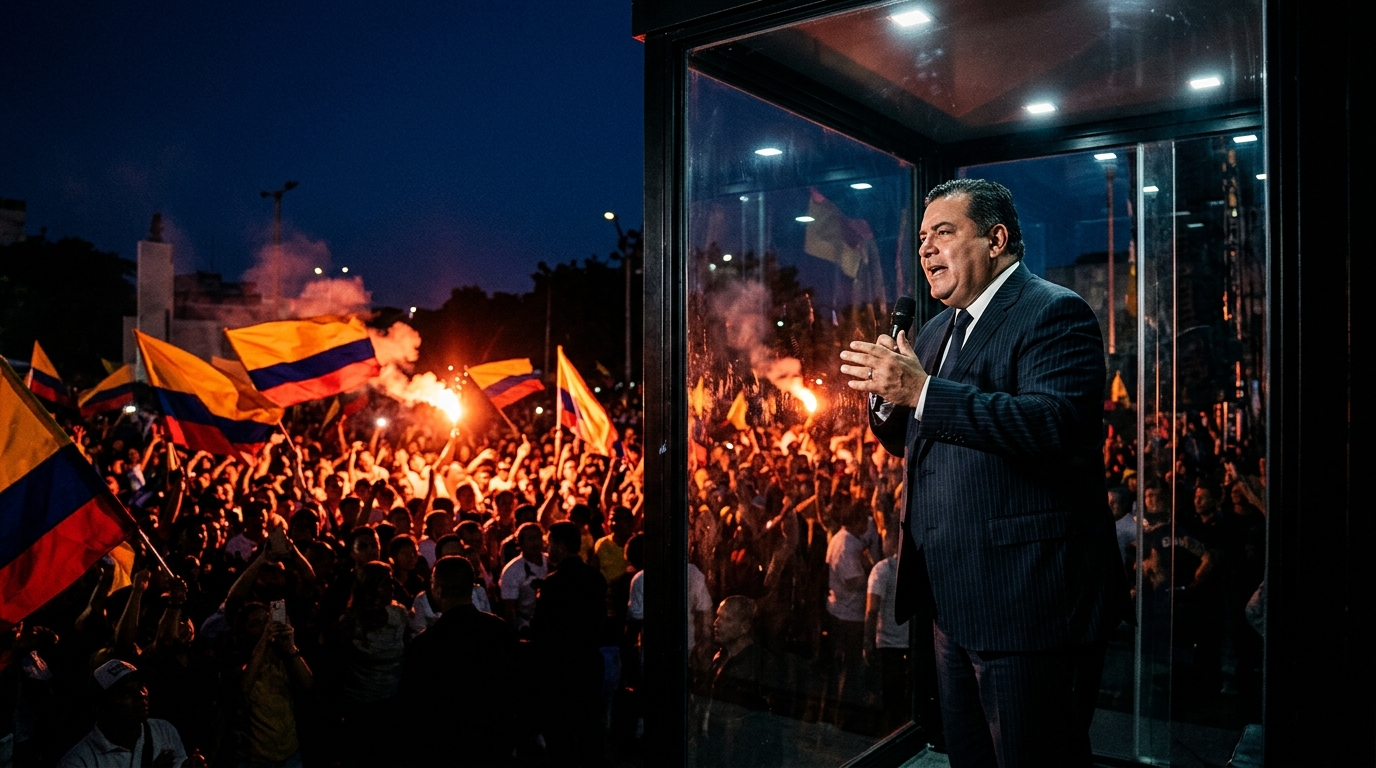
Colombia went to the polls on Sunday in one of the most polarised presidential elections in the country's recent history and returned a result so close that the losing side immediately announced it would challenge the outcome. By Monday, with 99.9 percent of votes counted, conservative businessman and lawyer Abelardo de la Espriella led Ivan Cepeda, a senator allied to outgoing President Gustavo Petro, by a margin of just one percentage point. Election officials had not formally declared a winner.
De la Espriella's candidacy had been, by virtually every conventional measure, improbable. He had never held elected office. He was not well known nationally before entering the race. He ran under the banner of a movement called Defenders of the Motherland, built substantially around a hard-line security message that appealed to Colombians exhausted by years of rising violence, negotiated peace processes with illegal armed groups that critics said had empowered rather than dismantled them, and an economy struggling under the weight of Petro's unorthodox economic management.
The Trump factor was real and visible. De la Espriella received an explicit public endorsement from the US President before the runoff vote, an unusual piece of American political involvement in a Colombian election that drew criticism domestically but that, in the context of Trump's broader popularity among right-leaning voters across Latin America, likely did not hurt.
Petro's camp, through candidate Cepeda, immediately began questioning the result. The claim centred on alleged irregularities in vote counting in certain regions, though independent electoral observers had not at time of writing confirmed any systematic problem sufficient to change the outcome. The Petro government, which had spent four years pursuing what it described as total peace with armed groups, including parallel negotiations with multiple illegal organisations that produced controversy rather than resolution, now faced the prospect of an incoming administration with dramatically different intentions.
Colombia's security situation provided crucial backdrop to the vote. The country's illegal armed groups, with more than 27,000 members combined, continued operating throughout the election period. Last year recorded 14,780 homicides, the highest figure since at least 2015, with much of the violence driven by clashes among those groups. Among the dead in 2025 was conservative presidential hopeful Miguel Uribe, whose assassination during the campaign added to an atmosphere of fear and urgency that de la Espriella's iron-fist messaging was specifically designed to address.
For the United States, a right-wing Colombian government aligned with Trump's administration represents a potentially significant shift in a relationship that has been strained under Petro, who proved an unpredictable partner on issues from the War on Drugs to Venezuela to migration flows northward. De la Espriella's stated policy direction suggests considerably more conventional alignment with Washington's regional preferences, though Colombia's extraordinarily complex internal security situation will test any new government regardless of its ideological starting point.


Comments (0)
Please log in to post a comment.
No comments yet. Be the first!