
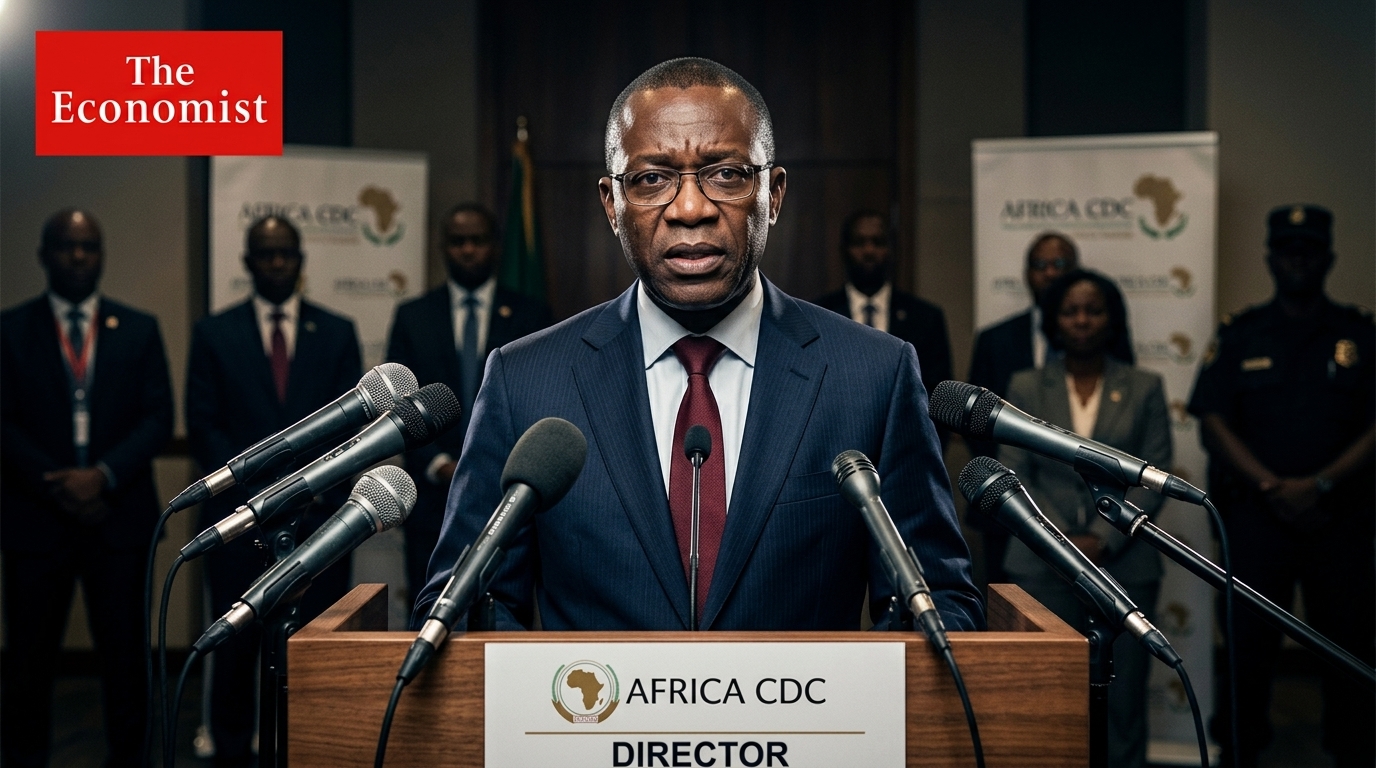
The numbers that Africa CDC Director General Jean Kaseya laid out this week were not numbers that public health officials use lightly. The Ebola outbreak currently spreading through the Democratic Republic of Congo has the potential to become the worst in history, he said. That is a sentence that requires a moment to absorb: the worst in history, in a disease whose history includes outbreaks that have killed thousands of people in some of the most harrowing circumstances imaginable.
The outbreak began in May in Ituri Province in the country's northeast, caused by the Bundibugyo strain of the Ebola virus, a somewhat less lethal variant than the more common Zaire strain but still extremely dangerous. What has made this outbreak different from previous ones, and what has elevated the concern to the level the Africa CDC is now expressing publicly, is its geographic spread.
Cases have been confirmed not only across multiple health zones in Ituri but in Kinshasa, the Democratic Republic of Congo's capital, a city of more than twelve million people. Cases have also been detected in Kampala, Uganda's capital, confirming cross-border transmission. An Ebola outbreak simultaneously present in two African capitals, in a country with one of the world's weakest public health infrastructures, in a security environment complicated by ongoing armed conflict in the east of the country, represents a combination of risk factors that health experts have long feared.
Jean Kaseya identified two specific challenges that the response is struggling to overcome. The first is trust. In parts of the DRC's eastern regions, deep mistrust of government health authorities, rooted in years of neglect, conflict and the traumatic experience of previous outbreak responses, has made community cooperation difficult. Some families have hidden sick relatives. Health workers have been confronted or attacked. Without community trust, contact tracing, the single most important tool for containing an outbreak, becomes nearly impossible to carry out effectively.
The second challenge is resources. The DR Congo has launched what it is calling the largest Ebola vaccination campaign in its history, deploying the proven rVSV-ZEBOV vaccine in ring vaccination campaigns around confirmed cases. But the scale of the outbreak, particularly its presence in an urban environment like Kinshasa, stretches vaccination and treatment capacity well beyond what was designed for rural containment. International funding and logistical support are arriving, but not always fast enough or in the right places.
The outbreak has already directly affected the 2026 FIFA World Cup, with DR Congo's national football team's preparations disrupted and players' families back home living through the health emergency. Some Portugal players wore tribute wristbands at their opener to acknowledge the Congolese people's situation.
For the international community, the Africa CDC warning is a call to act before a situation that is already serious becomes one that is catastrophic and much harder to reverse. The history of Ebola responses shows clearly that early, well-resourced intervention costs a fraction of what a full-scale emergency ultimately demands, in both money and in lives.


Comments (0)
Please log in to post a comment.
No comments yet. Be the first!