
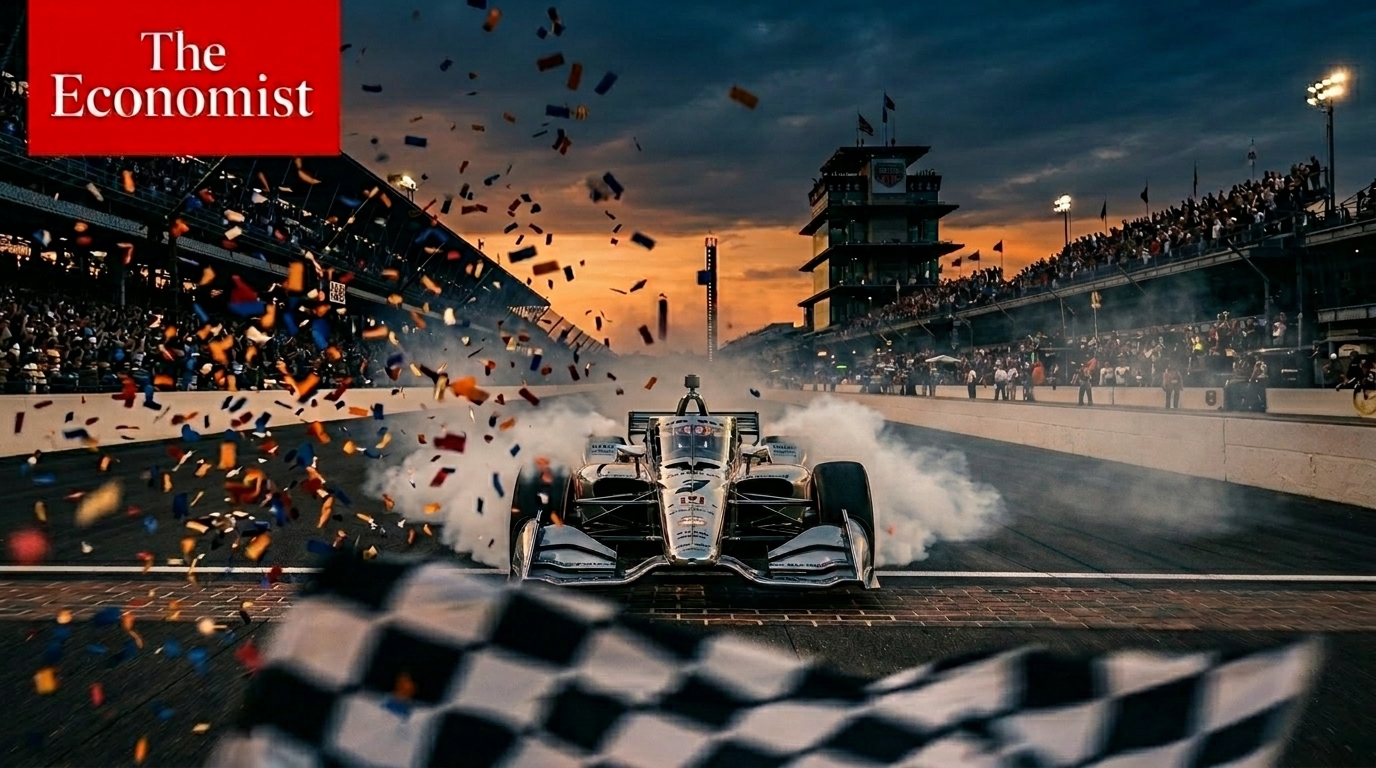
It was a finish so close that the naked eye could not determine a winner. Thousands of fans at the Indianapolis Motor Speedway on May 24, 2026 had to wait for the official timing system to confirm what had just happened: Felix Rosenqvist, driving for his IndyCar team, had crossed the finish line 0.0233 seconds ahead of American driver David Malukas to win the Indianapolis 500.
That margin — less than a quarter of a second across a 500-mile race — made it the closest finish in the Indianapolis 500's history, surpassing the previous record and immediately entering the annals of motorsport legend.
Rosenqvist, 32, from Vänersborg, Sweden, had been chasing an Indy 500 win for several years and arrived at the 2026 race as one of the favorites. But Malukas, a Chicago-born driver of Lithuanian descent with a growing reputation as one of the most exciting young talents in American open-wheel racing, had pushed him every inch of the way in the final laps.
The race itself was defined by strategy as much as speed. Multiple safety car periods, shifting weather conditions, and several dramatic pit stop sequences shuffled the field repeatedly. Rosenqvist's team made a crucial call on tire strategy with about 30 laps to go that gave him slightly fresher rubber for the final push — a decision that, by the slimmest of margins, proved to be the right one.
In the closing laps, it came down to a flat-out sprint. Malukas had drawn up alongside Rosenqvist on the final turn and the two cars hit the straight side by side. The crowd, roaring, had no idea who had won. The photo-finish equipment, however, had no doubt: Rosenqvist's nose was ahead by 0.0233 seconds.
In victory lane, a Swedish flag draped over his shoulders, Rosenqvist was emotional. "I've dreamed about this my whole career," he said. "I knew David was right there. I just gave it everything in that last corner and prayed."
Malukas, for his part, was gracious. "That's racing," he said. "We had a car that could win today. We almost did. I'll be back."
The race drew massive television audiences and trended worldwide on social media, with the photo finish image becoming one of the most shared sports photographs of 2026 so far. For IndyCar — a series that sometimes struggles for mainstream attention in a sports landscape dominated by Formula 1 — the moment was a perfect advertisement for the drama that American open-wheel racing can deliver.
Comments (0)
Please log in to post a comment.
No comments yet. Be the first!