
Restrictions Lifted as Supply Conditions Improve
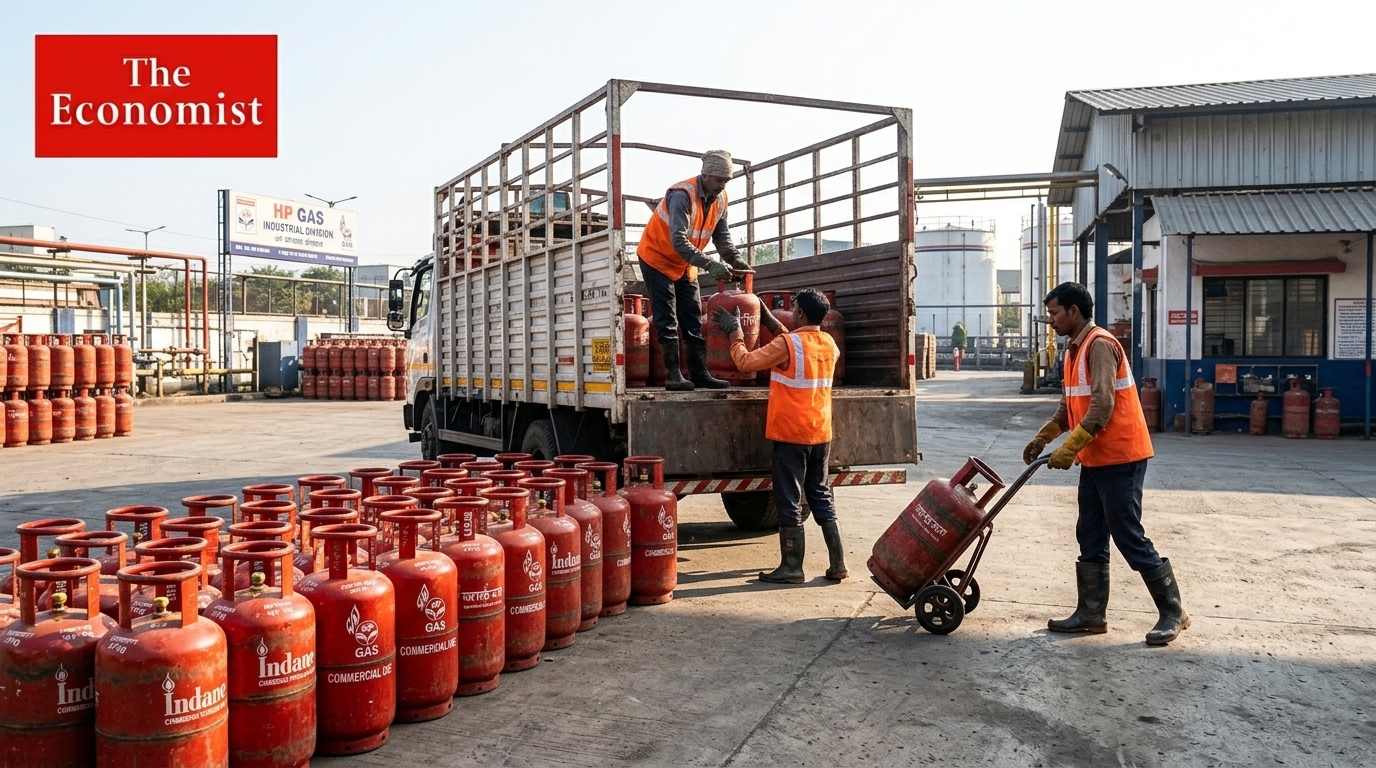
India has removed all sectoral restrictions on non-domestic packed LPG supplies, restoring deliveries to commercial and industrial consumers at levels prevailing before the West Asia crisis disrupted the country's fuel supply chain.
The Ministry of Petroleum and Natural Gas announced the decision on Thursday, stating that the improved LPG supply situation had made the emergency restrictions no longer necessary. The supply of bulk LPG, which had been fully suspended at the onset of the crisis, has also been partially restored to 50 percent of pre-crisis consumption levels.
"In a major relief to industrial and commercial LPG consumers, the government has removed all sectoral restrictions on the supply of non-domestic packed LPG and restored supplies to the levels prevailing prior to the West Asia crisis," the ministry said in a statement.
Why Supplies Were Cut in the First Place
The restrictions were imposed after the Iran conflict, which began in February 2026, disrupted imports from the Persian Gulf region. West Asia accounts for roughly 90 percent of India's cooking gas imports. To protect household consumers, the government initially halted commercial LPG deliveries to hotels, restaurants, and industrial users entirely, later restoring supplies in phases to approximately 70 percent of normal levels, with certain sectors still facing caps of up to 50 percent.
The government also invoked the Essential Commodities Act to direct that C3-C4 hydrocarbon streams be used exclusively for LPG production, diverting them from petrochemical manufacturing. That move hit companies like Reliance Industries, which had to reduce lucrative petrochemical output. With supply conditions now easing, authorities are reducing that diversion and restoring normal allocations to downstream industries.
Transition to Piped Gas to Continue
The government made clear that some commercial consumers who shifted to Piped Natural Gas during the crisis should remain on PNG. Other eligible consumers with access to city gas distribution networks will be progressively transitioned to PNG going forward, as part of a longer-term energy policy goal.
The Ministry of Petroleum and Natural Gas has directed Oil Marketing Companies to maintain comprehensive databases of commercial and industrial consumers to improve supply planning and coordination.
What to Watch
The Ministry's letter to Chief Secretaries of all states and Union Territories signals that centre-state coordination on fuel management is being placed on a more formal footing. Observers will be watching whether petrochemical production volumes recover quickly now that C3-C4 stream diversions are being eased, and whether the medium-term shift toward piped gas gains momentum in cities where the infrastructure is already in place.


Comments (0)
Please log in to post a comment.
No comments yet. Be the first!