
The US-Iran memorandum of understanding says a lot of things. It commits to a 60-day ceasefire. It opens the Strait of Hormuz. It sets the stage for nuclear talks. And it envisions, in Vice President JD Vance's words, "a true regional peace deal" that includes Israel, Lebanon, and the Gulf states.
Israel did not sign it.
That distinction has been the source of mounting friction in the week since the Versailles ceremony, and it moved to the front pages again this week when Israeli Defense Minister Israel Katz told reporters that Israel reserved the right to strike Iran for a third time if it judged that a threat required it. The comment landed like a lit match near a gas main. Iran has said from the start that any resumption of Israeli strikes on Iranian territory would constitute a violation of the terms it agreed to. Washington has been trying to hold both relationships at once.
Trump's position, stated at the G7 summit last month, was unambiguous: he does not want Israel to halt its military campaign in Lebanon, but he does want Israel to "use good judgement." What good judgement looks like in southern Lebanon right now is a matter of interpretation, and Netanyahu's interpretation differs considerably from the one being offered in Washington's diplomatic notes.
Netanyahu Goes to the Front Lines
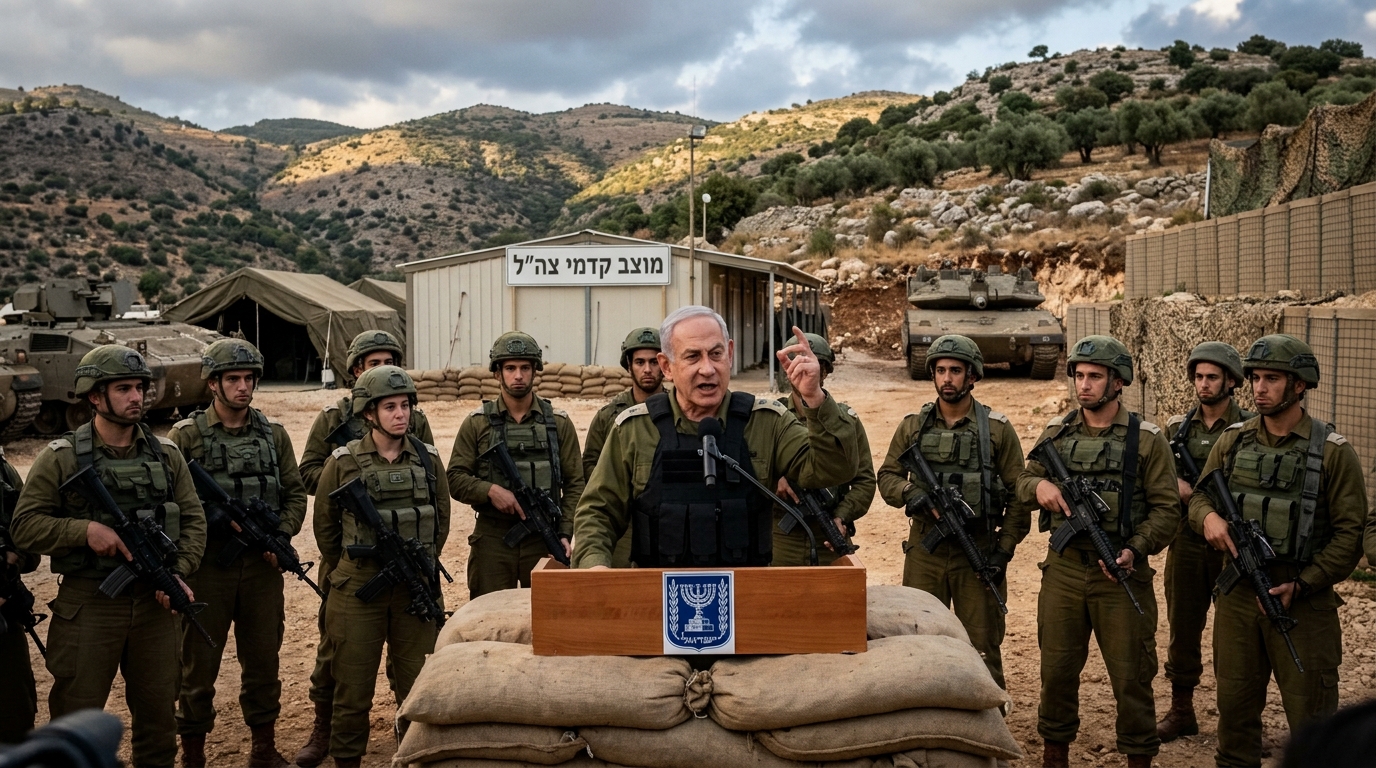
The Israeli prime minister traveled to southern Lebanon this week to visit soldiers operating in territory Israel has occupied since the early weeks of the wider regional conflict. He stood in fatigues, praised the troops, and said explicitly that Israel had no intention of withdrawing from its current positions. Under the terms of the US-brokered ceasefire framework, Israeli forces were supposed to begin a phased withdrawal from Lebanese territory.
That withdrawal has not happened. The UN Security Council received a briefing from its Lebanon monitoring mission this week that documented ongoing Israeli military activity in the south, describing Israeli positions as inconsistent with the ceasefire's withdrawal requirements. France, Germany, and the United Kingdom issued a joint statement calling for full compliance. Iran used the Israeli presence as a negotiating condition in Doha, with Ghalibaf reiterating on state television that one of Tehran's preconditions for any final agreement is "an end to hostilities in Lebanon."
Netanyahu's government has argued that Israeli forces remain in southern Lebanon because Hezbollah has not fully complied with the disarmament provisions of the original UN ceasefire from 2006, and that the current military presence is necessary to prevent Hezbollah from rebuilding its offensive infrastructure along the border. The argument has some support within Israel's security establishment. It has very little support in the diplomatic machinery trying to convert the Versailles MOU into something permanent.
Katz and the Third Strike
The Defense Minister's threat to strike Iran again is not being dismissed as political noise. Katz has been one of the more hawkish voices within Netanyahu's cabinet throughout this conflict, and his public statements tend to reflect positions that Netanyahu holds but expresses more carefully. When Katz says Israel reserves the right to strike Iran again, he is not freelancing. He is describing Israeli policy.
Iran's response was formal and direct. The foreign ministry said any additional Israeli strikes would be treated as a material breach of the ceasefire framework, and that Tehran would respond "accordingly." What "accordingly" means for a country whose military and nuclear infrastructure has been severely degraded is not entirely clear. But the IRGC has demonstrated over the past four months that it retains the capacity to disrupt shipping, fire missiles at US facilities, and activate proxy networks across the region.
Washington has pushed back privately on the Katz statement. US officials told reporters that Israel has been asked to avoid rhetoric that complicates the diplomatic track. Those requests have been made before. They have not always been followed.
The Ceasefire's Fragile Geography
What is emerging in Lebanon, in Iran, and across the broader Middle East is a conflict that has a ceasefire but does not yet have peace. The Versailles MOU set a 60-day window for negotiations. Roughly two weeks of that window have already been consumed by strikes, counter-strikes, grounded container ships, indirect talks in Doha, and threats from an Israeli minister who was not a party to the agreement he is threatening to violate.
The 60-day clock keeps running. At some point, a decision will need to be made about whether the partial and contested compliance with the existing framework is enough to build on, or whether the negotiations collapse and the conflict resumes. Israel's posture in Lebanon is one of the variables that could force that decision sooner than anyone intends.
Comments (0)
Please log in to post a comment.
No comments yet. Be the first!