
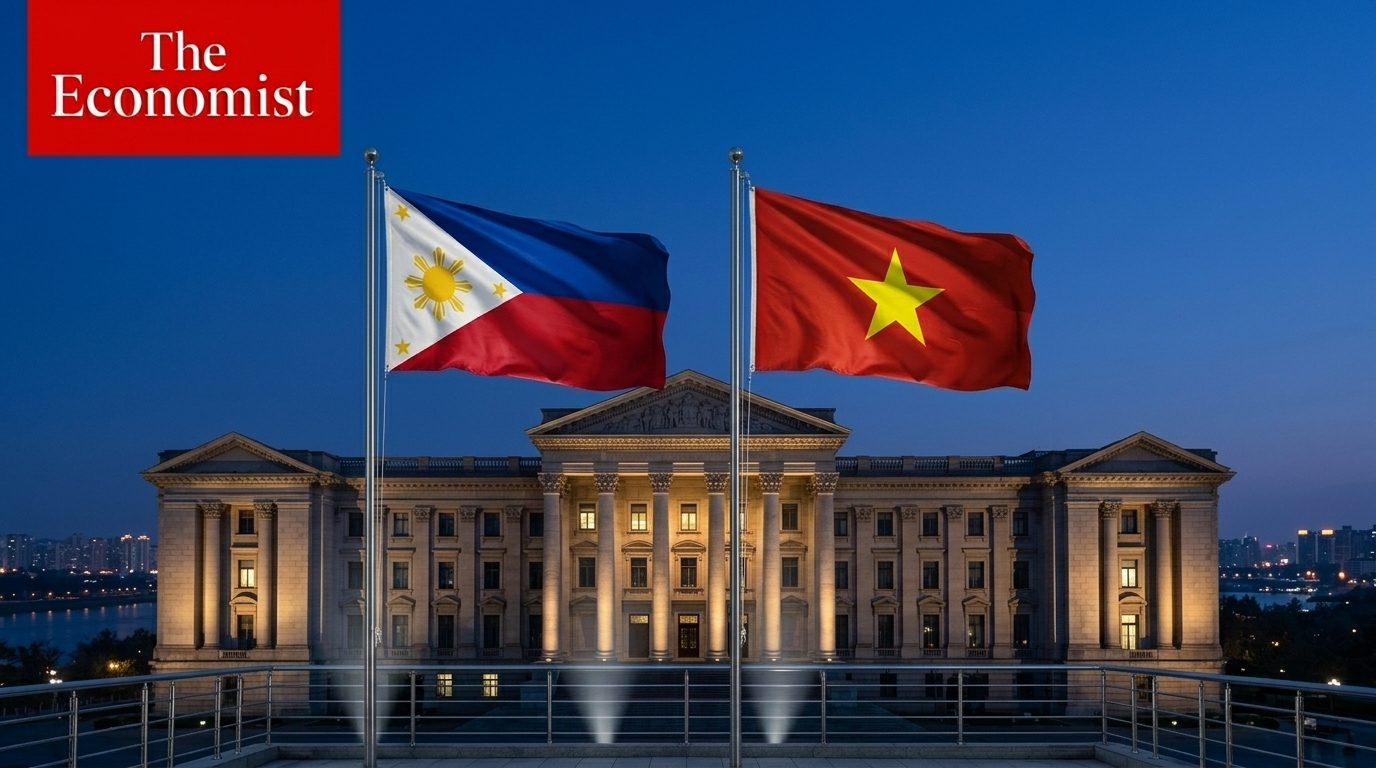
When Vietnamese President Tô Lâm arrived in Manila on June 1, 2026 for his state visit to the Philippines, the headline outcome was the formal upgrading of the two countries' bilateral relationship to what they jointly called an "enhanced strategic partnership." It was a diplomatic step that, while unlikely to generate much attention in Western capitals, carried significant weight in Southeast Asia.
The Philippines and Vietnam share more than just proximity in the South China Sea. They share, to varying degrees, a set of concerns about China's assertiveness in the maritime disputes that have defined Southeast Asian geopolitics for the past decade. Both countries have competing territorial claims in the South China Sea — against China, and to a lesser extent against each other. But in recent years, the greater threat to both has come from Beijing's increasingly aggressive posture: the construction of artificial islands, the harassment of fishing vessels, the coast guard confrontations in contested waters.
By upgrading their relationship to a strategic partnership, the Philippines and Vietnam sent a signal — both to each other and to the region — that they intended to coordinate more closely on issues of mutual concern. This could mean more joint naval exercises, greater intelligence sharing, coordinated positions in international forums like ASEAN, and potentially broader security cooperation.
For the Philippines, the move fits within a broader recalibration of foreign policy that has been underway since Ferdinand Marcos Jr. took office. The Philippines has deepened its security ties with the United States, expanded access for American forces to Philippine military bases, and taken a more assertive public stance on South China Sea disputes. Building stronger ties with Vietnam is another layer in that strategic repositioning.
Vietnam's foreign policy is characterized by what its leaders call "bamboo diplomacy" — flexible, pragmatic, bending in the wind without breaking. Hanoi maintains strong economic ties with Beijing while quietly building security partnerships with others. The upgrade with the Philippines fits that pattern.
The South China Sea remains one of the most complex and potentially dangerous territorial disputes in the world. It is a waterway of enormous strategic and economic value, over which multiple countries have overlapping claims, and in which a major power is using its military and economic weight to press those claims. The Philippines-Vietnam partnership is one small piece of the regional response to that challenge.
Comments (0)
Please log in to post a comment.
No comments yet. Be the first!